الحروف والحركات

- Description
- Curriculum
- Reviews
In Arabic Qur’anic and pedagogical terminology, two fundamental concepts are al-ḥurūf (الحروف) and al-ḥarakāt (الحركات). In English these are usually rendered as “the letters” and “the vowel-marks” (or “diacritics”).
-
al-ḥurūf (الحروف) – “the letters”
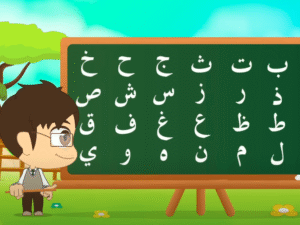
• There are 28 basic letters in the Arabic alphabet. They represent consonants (and three long vowels):
– Alif (ا), Bāʾ (ب), Tāʾ (ت), Thāʾ (ث), Jīm (ج), Ḥāʾ (ح), Khāʾ (خ),
Dāl (د), Dhāl (ذ), Rāʾ (ر), Zāy (ز), Sīn (س), Shīn (ش),
Ṣād (ص), Ḍād (ض), Ṭāʾ (ط), Ẓāʾ (ظ), ʿAyn (ع), Ghayn (غ),
Fāʾ (ف), Qāf (ق), Kāf (ك), Lām (ل), Mīm (م), Nūn (ن),
Hāʾ (ه), Wāw (و), Yāʾ (ي)
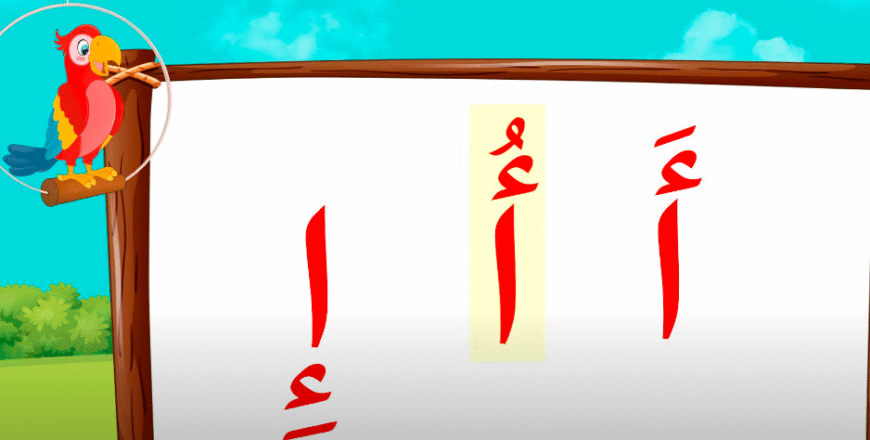
• (Hamza ء—the glottal stop—is written on or under Alif, Wāw or Yāʾ but is not always counted as a separate “letter” in the 28-letter sequence.)
• These letters form the root consonants of words; three of them (ا, و, ي) also serve as “long vowels.” -
al-ḥarakāt (الحركات) – “the vowel-marks”
These are small diacritical signs added above or below a letter to indicate:
• Short vowels:
– Fatḥa (ـَ) “a” as in kataba (كَتَبَ)
– Ḍamma (ـُ) “u” as in kutiba (كُتِبَ)
– Kasra (ـِ) “i” as in kitāb (كِتَاب)
• Nunation (tanwīn):
– Fatḥatayn (ـً) “an,”
– Ḍammatayn (ـٌ) “un,”
– Kasratayn (ـٍ) “in”
• Absence of vowel (sukūn):
– Sukūn (ـْ) indicates the consonant is not followed by a vowel, e.g. malʾ–(مَلْء)
• Consonant doubling (shadda):
– Shadda (ـّ) shows the letter is geminated (doubled), e.g. llāh (اللّٰه)
Why they matter
• In everyday Arabic writing harakāt are often omitted (readers supply the vowels from context).
• In the Qurʾān, poetry, learners’ primers and dictionaries, harakāt are written to ensure precise pronunciation.
Summary
– al-ḥurūf = the 28 letters of the Arabic alphabet (consonants + long-vowel letters)
– al-ḥarakāt = the diacritical “movement” marks showing short vowels, doubling or absence of vowel
They work together to tell you exactly how to pronounce every word.



Unlock the building blocks of Arabic in this compact, beginner-friendly course. You’ll:
• Master al-ḥurūf (the 28 letters of the Arabic alphabet)
• Learn al-ḥarakāt (fatḥa, ḍamma, kasra, tanwīn, sukūn & shadda)
• Practice writing each letter with its vowel-marks
• Build reading and pronunciation skills through guided exercises
By the end of this short course, you’ll confidently recognize, write and pronounce basic Arabic words.
Who Should Take This Course?
- Beginners in Arabic.
- Students preparing for Quranic studies.
- Anyone wanting to read Arabic without relying on transliteration.
1. Absolute Beginners in Arabic
- Individuals with no prior knowledge of the Arabic language or script.
- Learners looking to start from scratch and understand the basics of reading and writing.
2. Students Preparing for Quranic Studies
- Those learning to read the Quran or Islamic texts, where accurate pronunciation and diacritics (al-ḥarakāt) are critical.
- Learners needing to master vowel marks for proper recitation (tajwīd).
3. Self-Learners or Casual Learners
- People interested in Arabic for travel, culture, or personal enrichment.
- Those who want to read Arabic without relying on transliteration or English translations.
4. Language Students in Academic Settings
- Students enrolled in Arabic language courses (e.g., in schools, universities, or online programs).
- Learners preparing for standardized tests or certifications (e.g., DELF, ALPT).
5. Individuals with a Focus on Linguistics or Script Analysis
- Scholars or enthusiasts studying Arabic orthography, phonetics, or the structure of the Arabic alphabet.
Why This Audience?
The course balances practicality and depth, making it accessible to learners with varying goals:
- No prior knowledge is assumed, so it’s perfect for newcomers.
- Focus on diacritics ensures it’s useful for Quranic readers and those needing precise pronunciation.
- Real-world examples (e.g., greetings, numbers, vocabulary) cater to practical communicative needs.
- Interactive tools (audio, quizzes) support self-paced learning for busy learners.
This course serves as a gateway to further Arabic language study, whether for academic, religious, or cultural purposes.